Overview
A web-based Learning Management System (LMS) designed for an internal corporate learning program — an internal talent development program at Merkle Innovation — serving 3 distinct user roles (Student, Instructor, System Admin) across a comprehensive suite of learning, assessment, and analytics features. Delivered end-to-end over a 3-month design cycle, currently on internal test.
Objective
To design a scalable internal LMS that centralizes client training programs — enabling structured course delivery, progress tracking, assessment management, and performance analytics in a single platform tailored to the needs of learners, instructors, and administrators.
Problem Statement
No centralized learning infrastructure: Client lacked a dedicated platform to manage and deliver training programs, creating fragmented learning experiences for talent pool participants.
Multi-role complexity: The system needed to serve 3 distinct user types — Students, Instructors, and System Admins — each with fundamentally different workflows, access levels, and feature requirements.
Feature prioritization challenge: The breadth of required features across roles demanded a structured approach to information architecture and feature prioritization to ensure the most critical functionality was delivered first without compromising usability.
Stakeholder alignment: As an internal product with multiple stakeholders, design decisions required continuous validation against evolving expectations to ensure the final output met organizational goals.
My Role
UI/UX Designer in a project team at Merkle Innovation — responsible for end-to-end design execution including user research, feature mapping, information architecture definition per role, and full design pipeline from design system through developer handoff.
Process
Research & Requirement Gathering: Conducted user research based on stakeholder requirements, identifying the core needs, expectations, and workflows for each of the 3 user roles. Synthesized findings into problem statements and feature specifications.
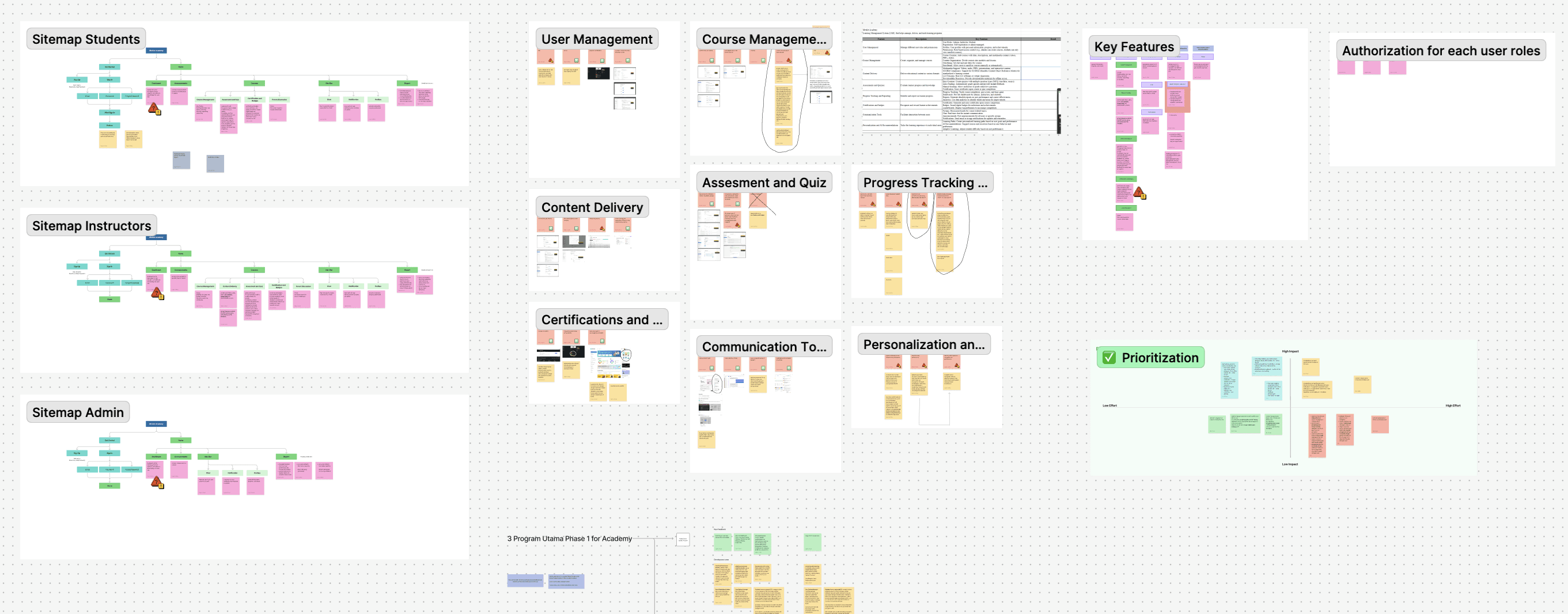
Feature Mapping & Information Architecture: Mapped features and modules per role using prioritization frameworks, then defined role-specific information architecture — producing sitemaps for Student, Instructor, and System Admin roles to establish a clear structural foundation before design execution.
Stakeholder Communication & Alignment: Maintained ongoing communication with product stakeholders to validate design direction, manage expectations, and ensure design decisions remained aligned with organizational goals throughout the project.
End-to-End Design Execution: Executed the full design pipeline: design system → wireframes → high-fidelity UI → interactive prototype, covering all modules across 3 user roles, followed by complete developer handoff.
Solution
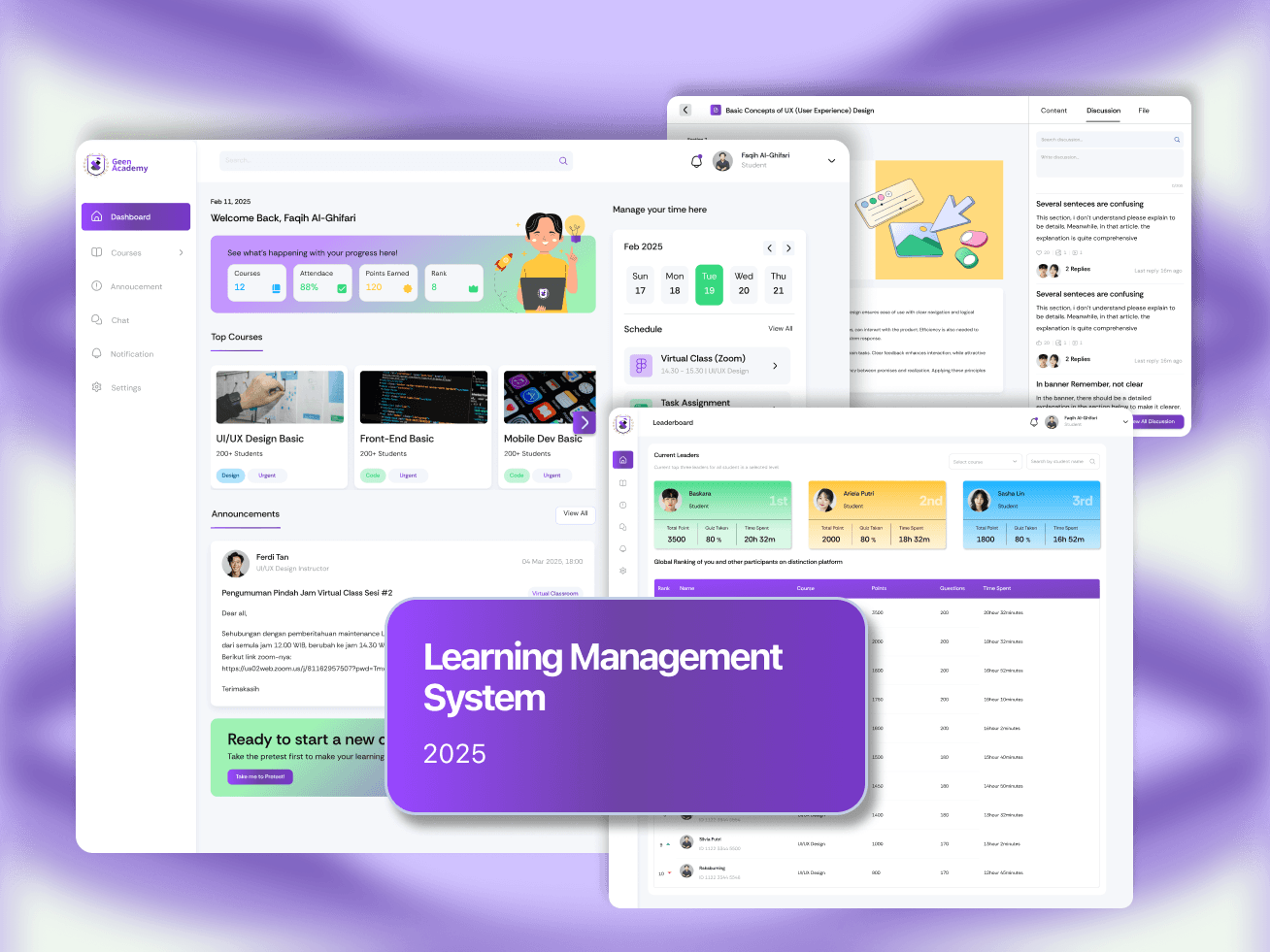
Designed a comprehensive LMS covering the full learning lifecycle across 3 roles — including course management, learning experience, quiz and assessment, leaderboard, chat and notifications, progress tracking, profile settings, report analytics, and others feature for instructors and admins.
Defined role-specific information architecture and sitemaps for all 3 user types, ensuring each role received a tailored navigation structure and feature access appropriate to their workflow.
Applied feature prioritization frameworks to manage scope across a complex, multi-role system — ensuring high-impact features were delivered first within the 3-month timeline.
Achieved stakeholder satisfaction upon delivery, with the platform successfully launched.
Process Documentation
Note
This is an internal platform — UI screenshots are not publicly shareable. Project documentation reflects the design process and scope of contribution.